Have you ever thought about the effect of grease and food waste on your establishment’s drainage system? This is a matter many overlook, however the consequences can be serious. Ensuring regular commercial grease trap cleaning is crucial for a well-functioning kitchen and to avoid high-priced drainage repairs. Our services provide professional grease waste removal tailored to your specific needs.
This resource about grease cleaning and pumping

Explore here about grease cleaning and pumping

Take a look about grease cleaning and pumping
Central to what we provide is routine maintenance of FOG traps. This is essential for ensuring adherence to regulations and productivity in your kitchen. Utilizing state-of-the-art tools and experienced professionals on call around the clock, we strive to help you in maintaining your establishment running efficiently. Let’s discuss the value of proper grease trap management and the top strategies for a sanitary and legal food preparation area.
Understanding Grease Traps And Their Importance
Grease interceptors are essential for the smooth and sanitary running of restaurant kitchens. Sometimes called grease catchers, they handle the effluent from culinary facilities effectively. Their function and significance are fundamental to the sustainability of dining establishments.
Defining A Grease Interceptor
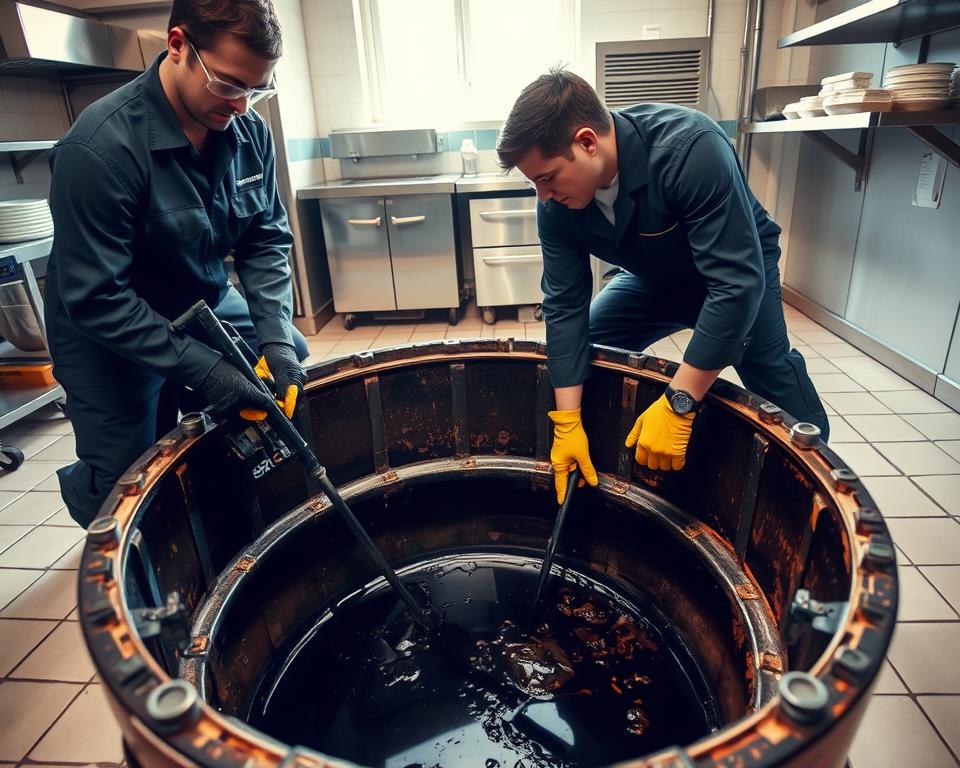
This unit is a plumbing device built to capture grease and solids before flowing into the public wastewater lines. Its main function is to stop these substances from blocking drains, which can cause expensive plumbing problems. Installed in the drain line of the kitchen, these traps use a flow control mechanism to capture debris and fats.
During the flow of drainage, lighter substances like grease separate to the upper layer, while heavier solids sink to the base. This guarantees effective segregation, maintaining the lines operating without issues.
The Mechanism Of Grease Traps In Restaurants
The way the trap works is based on separation and storage. During intense service periods, at the busiest times, maintaining these traps is essential. Regular pumping is necessary to manage the buildup of FOG and debris.
This cleaning process eliminates the stored grease, stopping clogs and maintaining hygiene. Efficient waste management systems maintain kitchen safety and in adherence with health regulations. Establishments that look after their waste systems correctly boost productivity and maintain public health standards.
| Trap Capability | Value In Food Service |
|---|---|
| Isolates fats and oils from water | Averts drain obstructions and high costs |
| Facilitates regular pumping | Ensures compliance with health regulations |
| Keeps kitchen environment clean | Supports safe food handling practices |
Commercial Grease Trap Cleaning: Best Practices
For all restaurant operations, servicing grease units is indispensable. A steady maintenance plan is fundamental to preventing blockages or overflows. Consistent care not only maintains productivity but also safeguards against sanitation penalties.
Regular Maintenance Schedules
Establishing a service routine is crucial for optimal grease trap performance. Typically, these traps should be cleaned on a monthly or quarterly basis, depending on the kitchen’s usage and grease output. Adhering to a timeline lowers the possibility of waste overload and associated problems.
Warning Signs For Grease Trap Maintenance
Identifying signs of interceptor failure can help avoid major issues and costly repairs. Typical warning signs are:
- Constant clogs in sinks and drains
- Unpleasant odors emanating from the trap
- Sluggish water flow
It is essential to respond to these warnings immediately. Neglecting these warnings can lead to major monetary and legal trouble from regulatory authorities. To ensure proper FOG disposal within food service facilities, engaging expert cleaners secures regulatory standing and seamless workflow.
Hiring Professional Grease Trap Cleaners
Picking the ideal grease waste provider is key to maintaining efficient kitchen operations. It is vital to know what to look for to make informed decisions. This will greatly improve your restaurant’s sanitation levels.
Factors To Consider When Hiring Grease Trap Services
Multiple aspects ought to impact your selection when picking a cleaning vendor:
- Experience: Opt for teams that are established. Their expertise in grease management can be invaluable.
- Credentials: Ensure the provider holds proper permits and complies with municipal codes.
- Customer Reviews: Check reviews from previous customers to measure trustworthiness and the standard of work.
- Tools and Methods: Ensure the company utilizes state-of-the-art tools for trap maintenance. Outdated techniques may not be effective.
- Speed of Service: Fast emergency response is crucial to avoid expensive business interruptions.
Benefits Of Using Professional Grease Removal Services
Professional grease trap services offer significant benefits:
- Efficient FOG Removal: Professionals guarantee refuse is discarded properly, minimizing environmental risks.
- Time Savings: Hiring pros for upkeep frees up kitchen staff to focus on food preparation.
- Compliance Assurance: Service providers monitor regulatory changes, ensuring you remain legal.
- Hygiene and Protection: Correct upkeep decreases danger to health and plumbing obstructions.
- Long-Term Cost Savings: Regular pumping services can stop costly fixes or equipment replacement in the future.
Environmental Importance Of Grease Management
Proper grease waste disposal is crucial for environmental protection. Good trap upkeep lowers contamination in the local water system. This doesn’t just protect aquatic life but also improves the ecosystem’s cleanliness. Establishments need to understand their part in pollution control to comply with grease trap waste regulations, consequently minimizing the ecological footprint of grease disposal.
Positive Environmental Effects Of Grease Control
Effective FOG management has several positive impacts on nature:
- It prevents grease from tainting the water supply by stopping it from reaching the sewers.
- It aids the operation of sewage treatment plants.
- It contributes to the well-being of the surrounding environment.
Laws Regarding Grease Trap Waste
Following grease trap waste regulations is crucial for the food industry. These rules ensure responsible handling of collected FOG. Important rules are:
| Regulation | Explanation |
|---|---|
| Federal Water Law | A national act controlling pollutant emission into US water bodies. |
| Regional Disposal Codes | Specific rules set by city councils about the processing of kitchen grease. |
| Documentation | Certified providers require accurate documentation of waste disposal activities to promote accountability. |
By adhering to these regulations, restaurants make sure of effective grease management and lower their environmental impact. Understanding the importance of proper grease waste disposal promotes a sustainable future for our communities and ecosystems.
Why Grease Interceptors Are Vital For Kitchens
In the busy industry of restaurants, interceptor maintenance are vital for preserving hygiene and speed. These traps are critical in blocking fats from entering the sewage system, which often leads to clogs and lead to hefty fines. Regular pumping prevents these units from spilling over, safeguarding the facility from health dangers and maintaining safe food standards.
Maintaining restaurant grease traps in excellent shape is essential to complying with health codes and keeping the area clean. A well-maintained interceptor minimizes the possibility of unpleasant stenches and ensures a clean area for employees and patrons. By opting for pro pumping services, eateries can concentrate on delivering quality cuisine free from concerns about FOG disposal.
Furthermore, regular pumping of grease interceptors goes beyond simple care; it represents an investment in the sustained growth of food service businesses. Restaurants that follow a consistent pumping schedule avoid the need for urgent sanitation services and support environmental initiatives through responsible FOG removal. Stressing the value of this maintenance is key for establishing a protected and regulated kitchen atmosphere.
******************************************************
Learn about this about grease cleaning and pumping

This reference about grease cleaning and pumping

Learn about this about grease cleaning and pumping
Related: Reliable Local Contractors for Grease Trap Pumping Marina Del Rey