Operating a restaurant in Pomona involves a long list of everyday responsibilities. One of the most important, yet commonly overlooked, jobs is controlling the fats, oils, and grease (FOG) flowing from your kitchen. Failing to handle this duty properly can cause major issues. This is where a dependable local partner becomes invaluable.
Read more about Grease Cleaning Pros in Pomona

This resource is about Grease Cleaning Pros in Santa Barbara

Click here for Grease Cleaning Pros in Torrance
Grease Cleaning Pros is your trusted expert for this essential service. Our team understands that maintaining your grease interceptor is not just one more routine chore. This is a crucial investment in both your business and the community around you.
If not cared for properly, a clogged system can create serious problems. That includes unpleasant backups, expensive health code violations, and significant fines. In severe cases, it can even force a temporary operational shutdown. These are risks no food service owner can afford.
Our team is the dependable, friendly solution trusted by kitchens across Pomona. We focus on full compliance and your peace of mind. With deep local knowledge, we ensure your operations run smoothly and safely.
Our service is built to be completely stress-free. Our experts work around your busy schedule, causing minimal disruption. Ready to learn how proper FOG management protects your business? Explore our comprehensive service offerings below.
Important Takeaways
- Routine grease interceptor maintenance is a critical investment for every food service business.
- Ignoring maintenance can cause health code issues, expensive fines, and possible shutdowns.
- A reliable local provider helps ensure compliance and lower risk.
- Professional maintenance should be hassle-free and fit into a busy kitchen’s schedule.
- Proper FOG management is essential for the smooth and safe operation of your restaurant.
- Choosing an expert team provides peace of mind and protects your business’s reputation.
- Preventive maintenance is always more affordable than emergency repairs or compliance penalties.
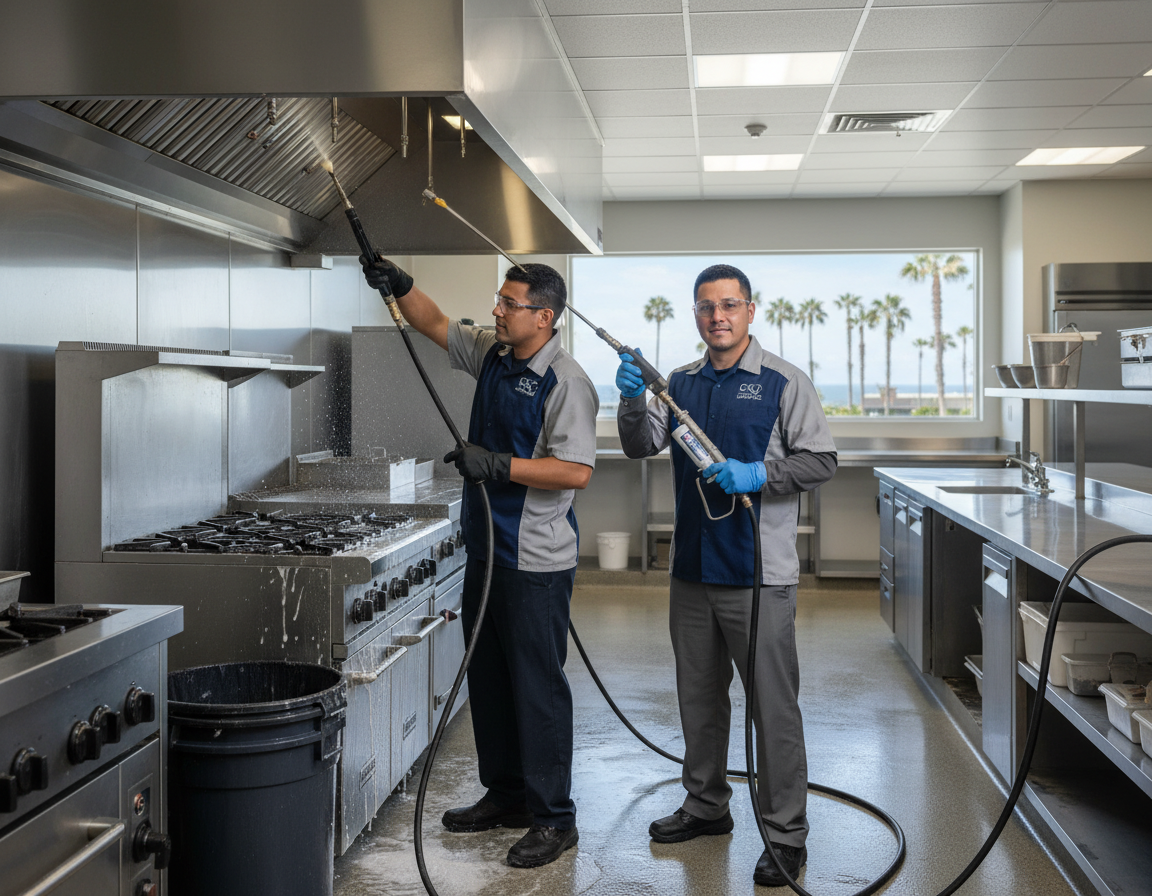
Welcome To Grease Cleaning Pros, Pomona’s Trusted Choice
Every successful food service operation in our city relies on a hidden hero: a well-maintained FOG management system. As your local partner, we are dedicated to keeping that system operating at its best.
Our goal is straightforward. We deliver top-tier, reliable service that safeguards your business and our shared sewer infrastructure. Think of us as your first line of defense against costly backups and violations.
Our technicians are certified and deeply experienced. They know local health code requirements inside and out. More importantly, they understand the fast-paced rhythm of a commercial kitchen.
Our company was built on a customer-first approach. You will always receive flexible scheduling, transparent pricing, and clear communication. We want to make this critical maintenance *truly* stress-free for your business.
We use professional-grade equipment on every job. Every bit of waste is handled through environmentally responsible disposal practices. You can count on us to care about our community just as much as your kitchen.
We understand that downtime means lost revenue. Our team focuses on minimizing disruption. We frequently work around your schedule, servicing interceptors during off-hours before prep begins or after closing.
It is our pride to be the trusted partner for dozens of local eateries. We serve everyone from national chains to beloved family-owned cafes. When you choose our team, you’re choosing a cleaning pros partner invested in your long-term success.
What It Really Costs To Ignore Your Grease Trap
Ignoring your kitchen’s grease interceptor may appear to save money at first. It is a gamble with serious consequences. The true price of neglect extends far beyond a simple service fee.
If this important system fails, the results can be severe and multi-layered. You are facing a problem that can damage your finances, operations, and reputation at the same time.
Fines And Financial Penalties
Municipalities impose strict rules on FOG management. Non-compliance fines are not small. They often start in the thousands of dollars and can soar much higher.
Records show penalties ranging from $1,000 up to an astonishing $50,000 for severe neglect. This is a direct financial hit that offers no return. It is pure loss.
Contrast this with the predictable cost of routine care. A scheduled visit may cost only a few hundred dollars. Emergency repairs or massive fines cost thousands.
The math is simple. Investing small amounts on a regular basis helps prevent catastrophic losses later.
Health Department Issues And Forced Shutdowns
A malfunctioning interceptor during a health inspection is a nightmare scenario. They can issue a “Cease and Desist” order on the spot. Your kitchen shuts down instantly.
The impact that follows can be brutal. You lose revenue from every meal not served. Perishable inventory spoils. Employees are left waiting while you scramble for a solution.
This type of closure is not a short pause. It may last for days until the system is cleaned, inspected, and approved. The total financial damage from a shutdown often dwarfs any fine.
Routine professional maintenance is your strongest protection against this risk. It proves due diligence and keeps your doors safely open.
Damage To Reputation And Customer Trust
Violations and shutdowns create documented records. The reputational cost can be even more damaging than the financial one. In a connected community, word of a health violation can spread very quickly.
Trust that took years to build can disappear overnight. Customers choose where to eat based on safety and cleanliness. One incident can permanently change how they see your business.
There are also direct liability risks. An overflow can create slippery floors. This leads to employee or customer slip-and-fall accidents.
Such incidents can trigger costly lawsuits. They may also harm expensive kitchen equipment when waste backs up into work areas.
Your good name is priceless to protect. Consistent documented care for your grease trap sends a clear message that safety matters. It’s a silent but powerful message to everyone.
If you think you may need professional service now, do not wait for a crisis. The affordable, smart choice is to act today.
Contact us to get quote and protect your business’s future. Prevention is always the most cost-effective path.
How Often Should Your Pomona Kitchen Clean Its Grease Trap?
The frequency of interceptor maintenance varies widely based on your specific kitchen’s output. There’s no one-size-fits-all answer. A smart schedule protects your plumbing, your budget, and your business license.
Most local regulations establish a clear standard. They require service when fats and solids fill 25% of the unit’s capacity. At that point, efficiency falls quickly. Legal and functional problems are likely.
This rule must be followed without exception. It helps keep everything flowing properly.
Why Monthly To Quarterly Service Is Common For Restaurants
In a busy restaurant, grease traps need frequent attention. A high-volume spot serving fried foods might need monthly service. That helps keep pace with heavy usage.
Smaller cafés may deal with a lighter grease load. Because of lighter output, cafes might stretch service to a quarterly schedule. Every kitchen is different.
Some places face even heavier demands. A crowded sports bar or a large hotel kitchen can sometimes fill an interceptor within only two weeks. Those grease traps need very frequent service.
Do not guess when it comes to your schedule. Regular checks show how fast your unit fills. This data builds a perfect plan for you.
Factors That Determine Your Cleaning Schedule
Several key elements decide how often you should call for service. Your menu is one of the biggest factors. A menu focused on burgers and fries creates more waste than a salad-focused concept.
The number of customers you serve each day affects the schedule. When business increases suddenly, buildup happens faster. A busy season may push you onto a monthly service schedule.
Interceptor size makes a big difference. A compact under-sink model reaches capacity more quickly than a larger outside tank. Smaller cafés may need less frequent service when their equipment is properly sized.
Local health codes have the final say. The city of Pomona has specific rules that apply. Knowing those rules can help you avoid violations and fines.
Good kitchen habits help, too. Scraping plates and using sink screens slows down filling. Even so, the best kitchen habits cannot eliminate the need for professional cleaning.
The best approach is to track everything. Keep detailed records of each pump-out. Record the date and how full the trap was.
This history shows your unique pattern. That allows you to predict the next service date more accurately. You will not be caught by surprise.
Working with a reliable local team makes this process easy. They help you create a data-driven schedule that fits your operation precisely. This preventive step cuts stress and saves money in the long run.
Warning Signs Your Grease Trap Needs Immediate Attention
When fats, oils, and grease overwhelm your kitchen plumbing system, it sends obvious distress signals. Learning to recognize these alerts is crucial. Catching them early prevents a small issue from becoming a full-blown crisis.
Never dismiss these symptoms as normal. These are clear signals that your interceptor system needs attention. Addressing them promptly protects your operations and your budget.
Slow Drains And Gurgling Sounds
One of the earliest and most common warning signs is slow drainage. If water sits in your three-compartment sink longer than normal, that is a warning sign. Grease buildup is restricting normal flow.
Listen closely to your floor drains. Gurgling or bubbling noises are not harmless warning signs. That sound points to trapped air being forced past a significant blockage in the plumbing lines.
This kind of buildup shows that your interceptor is nearing capacity. Your drains need professional attention before they stop working completely.
Foul Odors And Visible Grease Backups
A sudden rotten egg odor is a serious warning sign. This smell is typically produced by hydrogen sulfide gas. It forms when grease decomposes and it is toxic.
These foul odors create an unpleasant environment. They are hazardous for both staff and customers.
Visible backups are an even clearer sign of trouble. If you notice grease or food solids left in sink basins after draining, act immediately. A greasy film usually means the unit is overflowing and no longer working correctly.
This visible failure requires immediate service to avoid a health violation.
Several Drains Clogging At The Same Time
Is your kitchen sink, mop sink, and floor drain all backing up simultaneously. This is a critical sign. The issue is probably in the main line or in a completely full interceptor.
When multiple drains go down at once, your whole system is compromised. Do not attempt a DIY fix like pouring hot water down the line.
Hot water only melts grease temporarily and does not solve the problem. It allows the fat to travel further down and solidify into a worse, more compacted clog.
This situation often means your traps need more than a simple pump-out. At that point, you may need hydro jetting service to fully clear the pipes.
These symptoms collectively shout for expert help. As soon as the first signs appear, call a dependable local service team. An expert assessment and proper cleaning help restore flow and avoid expensive damage.
Our Thorough Grease Trap Cleaning Process
Our detailed service protocol ensures every component of your interceptor is restored to peak performance. We use a strict, multi-step sequence built for complete effectiveness.
This methodical process helps ensure nothing is overlooked. Your system will continue to function reliably until the next scheduled maintenance visit.
Initial Inspection And Documentation
Every job begins with a comprehensive evaluation. Our technician locates and accesses your unit.
Our team measures how thick the accumulated FOG layer is. This initial assessment is carefully documented. These records are important for your health code compliance documentation. They serve as proof of diligent, regular cleaning.
Full Pumping And Scraping
Next, we deploy our specialized vacuum truck. The equipment is used to evacuate every bit of material from the chamber. This removes floating fats, wastewater, and settled solids. The result is a completely emptied interceptor.
Pumping alone isn’t enough. Our team then manually scrapes the interior baffles clean. That critical trap cleaning step clears away hardened buildup the vacuum cannot reach. That step gets the unit ready for thorough washing.
Pressure Washing And Final Inspection
High-pressure washing is a key part of true professional cleaning. We scour every interior wall and the floor. This eliminates all traces of grease and harmful biofilm. The chamber is left sanitized and odor-free.
We then conduct a vital final inspection. We check all inlet and outlet pipes for hidden clogs. The structure itself is examined for any cracks or wear. This is important for long-term reliable operation.
We finish by refilling the unit with clean water at the proper level. This helps ensure the system works perfectly the moment service is complete.
From beginning to end, a standard grease trap cleaning usually takes between 30 and 90 minutes. Our team is trained to work around your schedule seamlessly.
We cause minimal disruption to your kitchen’s flow. We provide complete documentation at the end of service to prove your system is compliant and ready for use.
Professional trap cleaning gives your equipment the best chance to works perfectly. It’s the reliable result you expect from a dedicated local service.
Trust Grease Cleaning Pros to execute this thorough process. We plan every visit to work around your schedule while protecting your business.
Understanding Grease Interceptors And Their Maintenance
When a kitchen’s output demands a more substantial waste containment system, a grease interceptor becomes the essential backbone. These larger systems are crucial for kitchens producing a high daily volume of cooking byproducts.
Proper interceptor care is a specialized service area. This kind of work demands specific expertise and specialized equipment.
Understanding What A Grease Interceptor Is
You can think of a grease interceptor as the large-scale, usually underground version of the under-sink grease trap. While a typical trap might hold 50 gallons, an interceptor can contain 500 to 5,000 gallons.
It is built to serve full buildings or high-volume operations. Busy local steakhouses, hotels, and food courts rely on this technology.
Systems like these grease interceptors are essential when dealing with significant pomona grease production. They help stop fats and oils from reaching municipal sewer lines.
The way a trap interceptor works is by reducing wastewater flow speed. That allows fats to cool, solidify, and rise to the top where they separate from water.
That process protects shared plumbing infrastructure throughout the community. It serves as an important first line of defense for our shared environment.
The Specialized Cleaning Process Large Interceptors Require
Maintaining these massive units is not a do-it-yourself task. The process involves heavy equipment and certified expertise.
The first step involves opening large concrete vaults or metal tank systems. Technicians have to safely remove heavy manhole covers to access the unit.
An industrial-capacity pump truck is then deployed. This equipment removes thousands of gallons of waste, water, and settled solids.
The interior has multiple compartments or baffles. Each section requires careful scraping and high-pressure washing.
A comprehensive inspection is a critical step. Experts check inlet and outlet tees, flow control devices, and the structure for cracks.
The inspection also includes checking for groundwater infiltration. This helps confirm the unit remains sound and helps prevent environmental problems.
This level of professional maintenance is why these systems need professional service teams. It involves far more than a basic pump-out.
Despite regular cleaning in the kitchen, interceptors fill up on a predictable schedule. Most of these systems need service every three months.
The highest-volume kitchens, however, may require monthly service. Their grease output can exceed what a standard schedule can handle.
Following a strict regular cleaning schedule is non-negotiable. It prevents catastrophic system failures that can shut down operations.
Even more importantly, it helps stop major environmental contamination. The remediation costs for such an event are extraordinarily high.
Working with a local expert ensures this professional maintenance is handled safely and in compliance. They have the right tools and know-how for your large grease trap interceptor.
Maintaining your grease interceptors properly is an investment in both business continuity and community well-being. This is a responsibility that should be managed by experienced specialists.
Used Cooking Oil Pickup And Responsible Recycling
Beyond the fryer basket, the oil you’ve finished using presents a critical choice. When recycled properly, that messy waste becomes a useful asset. Unsafe disposal, however, can lead to costly plumbing disasters.
This golden liquid is far from mere waste. When handled correctly, it fuels a positive cycle for your business and the environment.
Partnering with a dedicated service transforms this process. That gives you a reliable collection service and the possibility of financial benefits.
Avoid Plumbing Disasters And Earn Rebates
Pouring used cooking oil into a drain is a major cause of severe blockages. As it cools, it solidifies inside pipes. The result is a dense clog that can affect your entire kitchen system.
Backups like these often lead to emergency repairs, lost business, and major fines. Repairing a major sewer line break can be extremely expensive.
A scheduled pickup program can eliminate this risk completely. Our service includes sealed storage containers for your cooking oil waste.
We collect it on a regular schedule that fits your volume. This protects your drains while helping your operation run without interruption.
This service also unlocks an added benefit: rebates. The collected used cooking material has market value.
Restaurants often earn money or credits according to their recycling volume. That converts a disposal problem into a small source of revenue.
This proactive approach is a win-win. You protect your plumbing and put money back into your business.
From Your Fryer To Renewable Fuel: The Recycling Journey
The journey of your cooking oil is remarkable. Once collected, it is transported to a processing facility.
There, the oil is carefully filtered to remove food particles and water. That purification step is critical for producing a clean starting material.
The purified oil then goes through a chemical process known as transesterification. That process transforms it into biodiesel, which is a clean-burning renewable fuel.
This biodiesel powers trucks, heavy machinery, and even heating systems. This means your kitchen’s waste can directly reduce fossil fuel reliance.
The environmental impact is significant. Compared with traditional diesel, biodiesel can cut greenhouse gas emissions by up to 85%.
Furthermore, every single gallon of used cooking oil recycled prevents the contamination of roughly one million gallons of water. That helps protect local rivers and watersheds.
Choosing recycling means your kitchen actively contributes to a cleaner local environment. It’s a powerful example of a circular economy in action.
Some kitchens attempt a quick fix for slow drains by pouring hot water down the line. That only melts grease temporarily.
The liquefied fat simply travels further down your pipes. It then cools and hardens into an even more solid, extensive clog.
For plumbing lines carrying years of buildup, a more powerful solution is necessary. That is where hydro jetting becomes essential.
Hydro jetting powerfully removes years of built-up grease, sludge, and debris. This process uses a focused stream of water at pressures reaching 4000 PSI.
That powerful force scours the inside walls of the pipes completely clean. This method is highly effective and works without harsh chemicals.
When drains are consistently slow, you may need hydro jetting. It is the most reliable solution for restoring full flow.
Implementing a few best practices maximizes your benefits:
- Always use designated, leak-proof containers for used cooking oil storage.
- Use strainer baskets in sinks so food solids are caught before entering drains.
- Do not pour fats or cooking oil down any drain, even floor drains.
- Work with a certified recycler to ensure correct handling and documentation.
Ready to protect your plumbing and explore possible rebates? Get quote from our local team today. We’ll design a pickup schedule that turns your pomona grease output into a community resource.
Schedule Your Pomona Grease Trap Service Today
Your last service date is more than just a note on a calendar. It’s a direct indicator of your business’s health and safety.
Check your records right now. If the entry is unclear or over 90 days old, consider your grease trap overdue. Do not wait until a foul odor appears or a sink backs up.
Proactive, professional cleaning is your most cost-effective strategy. This protects your Pomona restaurant against violations, fines, and closures.
Scheduling with Grease Cleaning Pros is simple. We work around your schedule and complete every trap cleaning job efficiently. Your system works perfectly as soon as we finish.
Our service includes crucial documentation. That helps satisfy health inspector requirements with ease.
Ready for peace of mind? Get quote today from our friendly team today. We will build a regular maintenance schedule tailored to your kitchen.
You truly need professional service for your pomona grease trap. Let us be your reliable local partner for all grease trap cleaning needs. Get quote now and protect your operation today.
Related: How Grease Cleaning Pros in Canyon Country Ensure Restaurant Safety